

This post may contain affiliate links. Please read our disclosure policy.
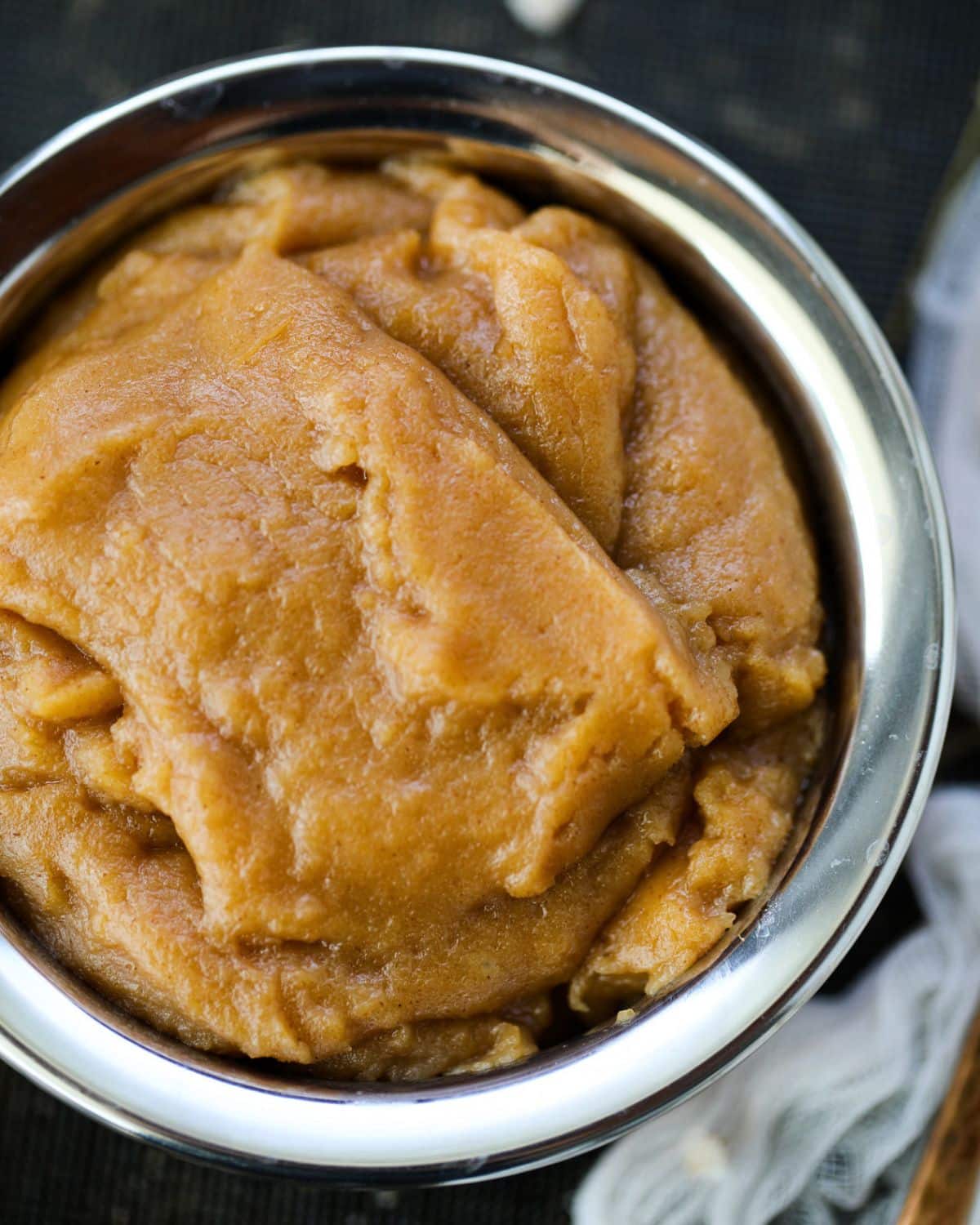
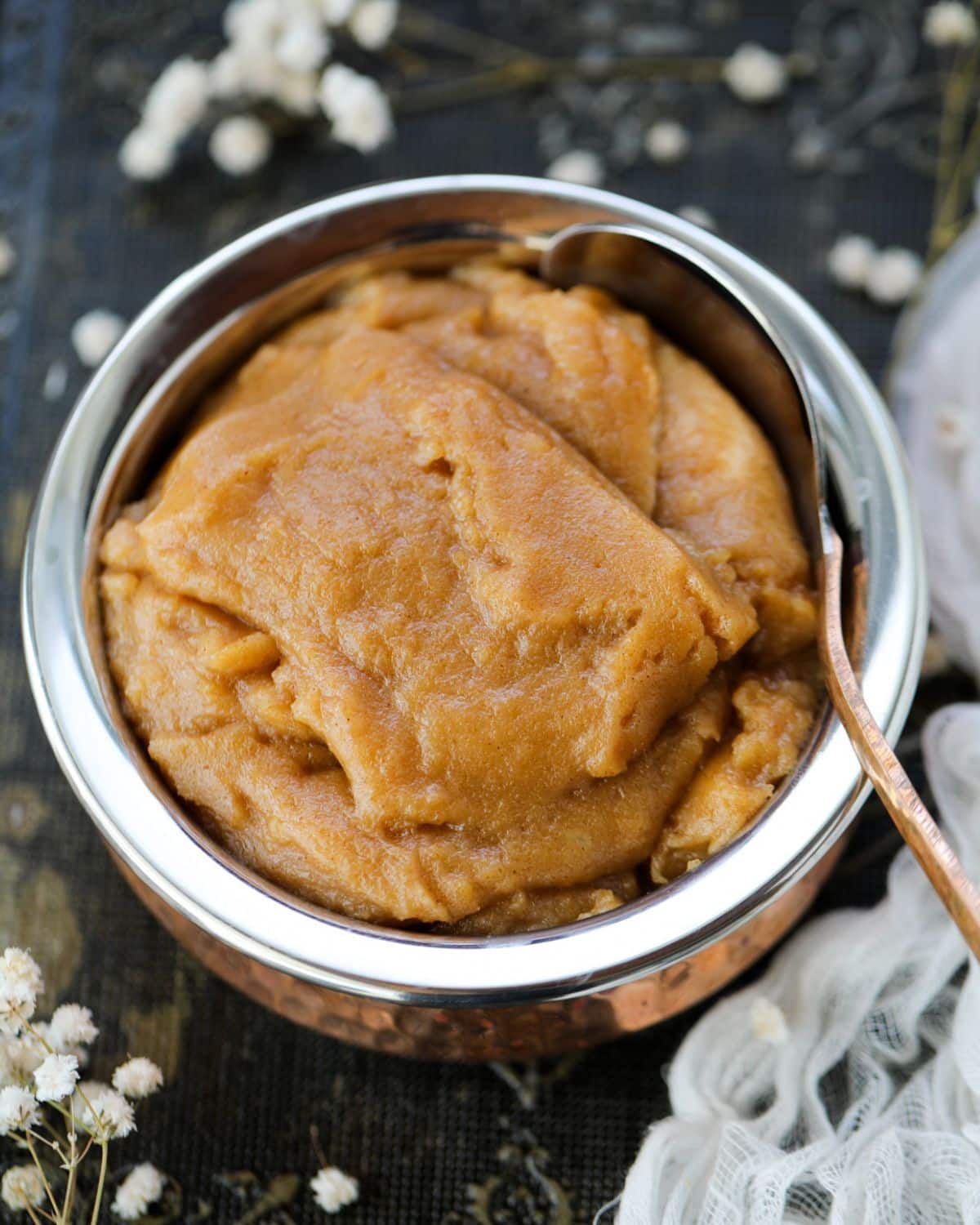
Atta Halwa, also known as wheat halwa, is made in a kadhai (an Indian wok) with just four simple ingredients: butter, atta (Indian wheat flour), sugar, and water. Traditionally, Atta Halwa is made with ghee, but I prefer mine with butter. I learned this recipe from my sister, who makes the best Atta Halwa and taught me all her tricks.
One reader commented:
★★★★★
“Very easy and excellent recipe of the Kada Prasad. Steps are easy to follow and we really enjoyed it. I usually make it once a month along with urad and Punjabi Vadi. Nisha’s recipes are very good and I love making them.”
– Jyoti
My sister’s ATTA HALWA (KADA PRASAD)

Whenever I visit the Gurudwara or Mandir, I love spending time in prayer and, of course, receiving the prasad. Traditionally, kada prasad served at a Gurudwara is made with ghee, atta (wheat flour), sugar, and water in a standard 1:1:1:2.5 ratio.
DIFFERENCE BETWEEN ATTA HALWA & KADA PRASAD
Atta Halwa is an eggless dessert that’s very similar to Kada Prasad and uses the same basic ingredients, but the proportions can vary. My sister’s version uses less sugar and a different ratio, making it a little lighter and less sweet. I use the names interchangeably in this recipe.
Kada Prasad is a sacred offering served at a Gurudwara. Traditionally, it’s made with ghee, atta, sugar, and water using a specific ratio. As the Karah Prasad is prepared, Gurbani is recited, making it a sacred offering.
RECIPE TESTING
I’ve tested this recipe with both ghee and butter, and butter wins – hands down. I prefer butter to traditional ghee because the halwa isn’t as rich or heavy. Butter quality matters here, so I recommend a good brand like Kerrygold.
I’ve also tested this recipe with both unsalted and salted butter, and I prefer the latter. Traditionally, prasad is made with ghee and no salt, but I prefer a little salt, which brings out the halwa’s flavor.
Ingredients
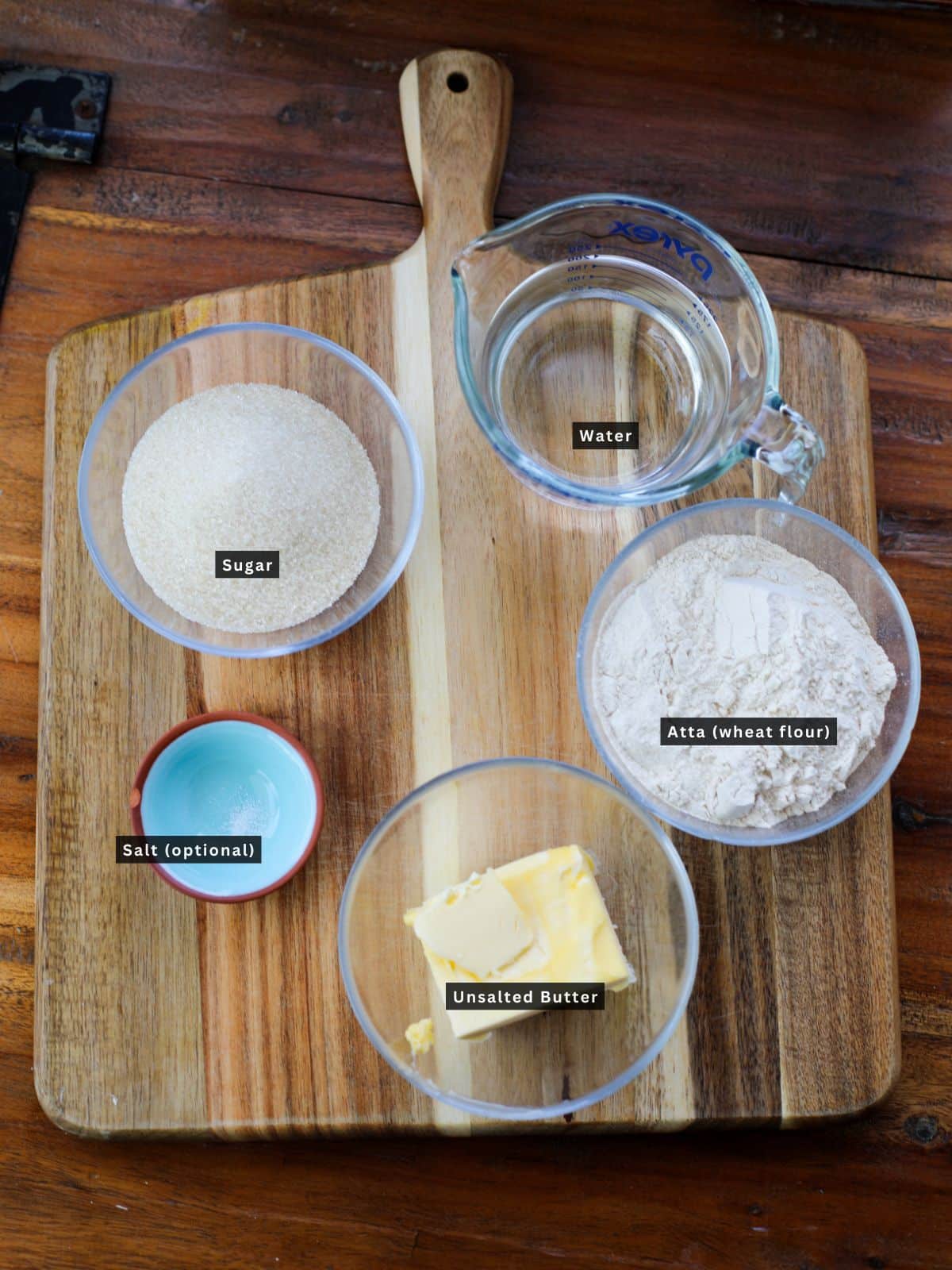
*See the recipe card below for full information on ingredients and quantities.*
Let’s make atta halwa
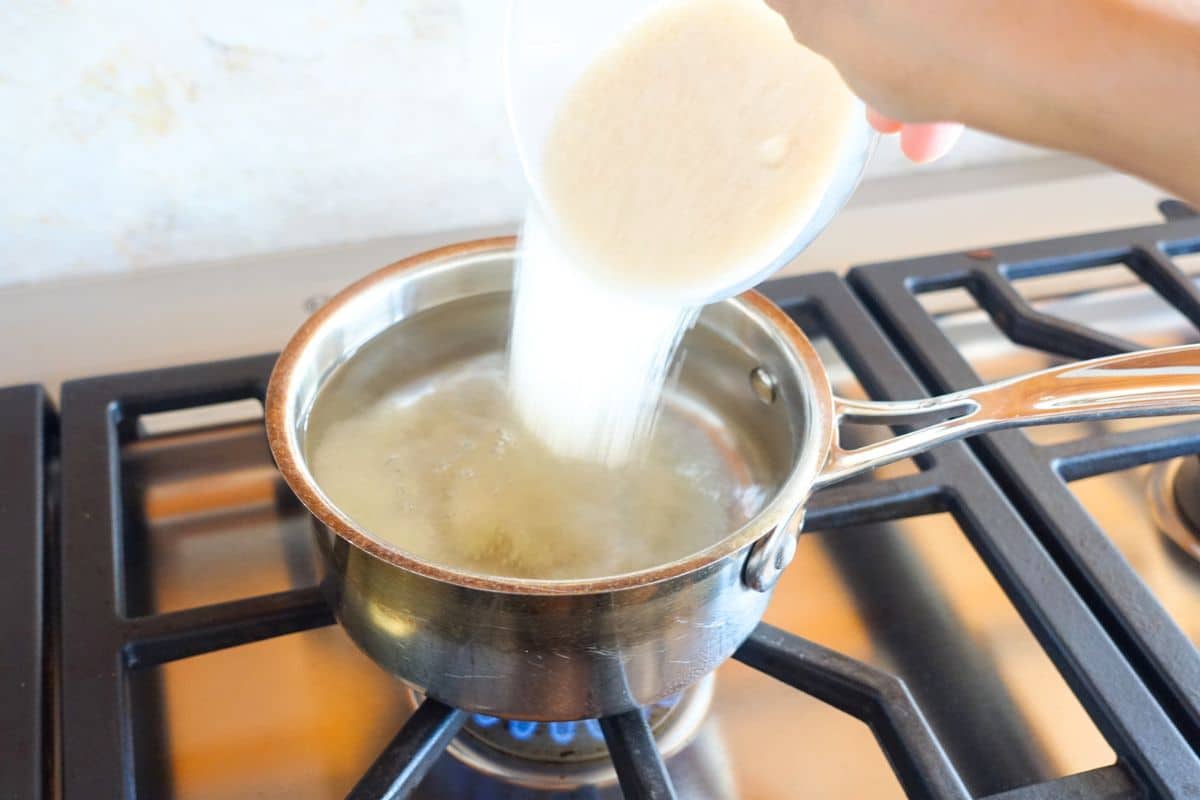
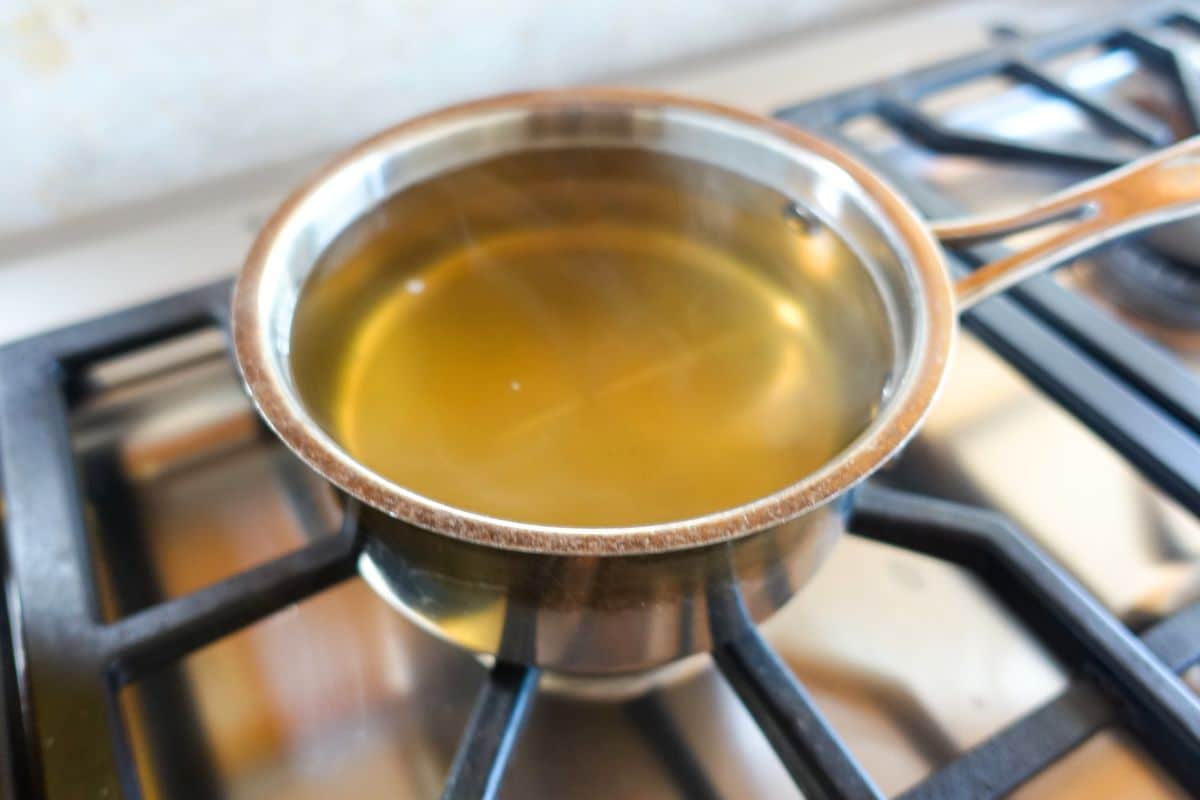
- Prepare the Sugar Syrup
Combine water and sugar in a small pot. Heat on medium until the sugar dissolves, without bringing it to a boil. Cover and set aside.
- Melt Butter & Add Flour
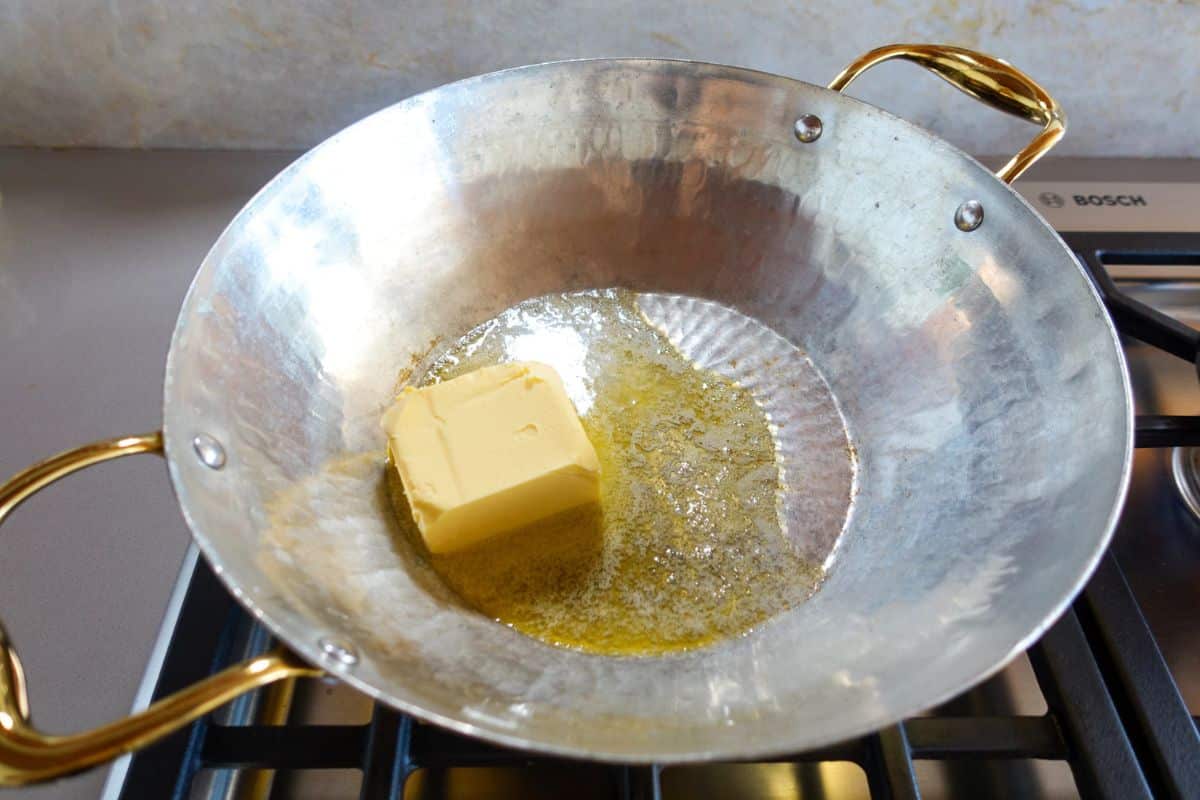
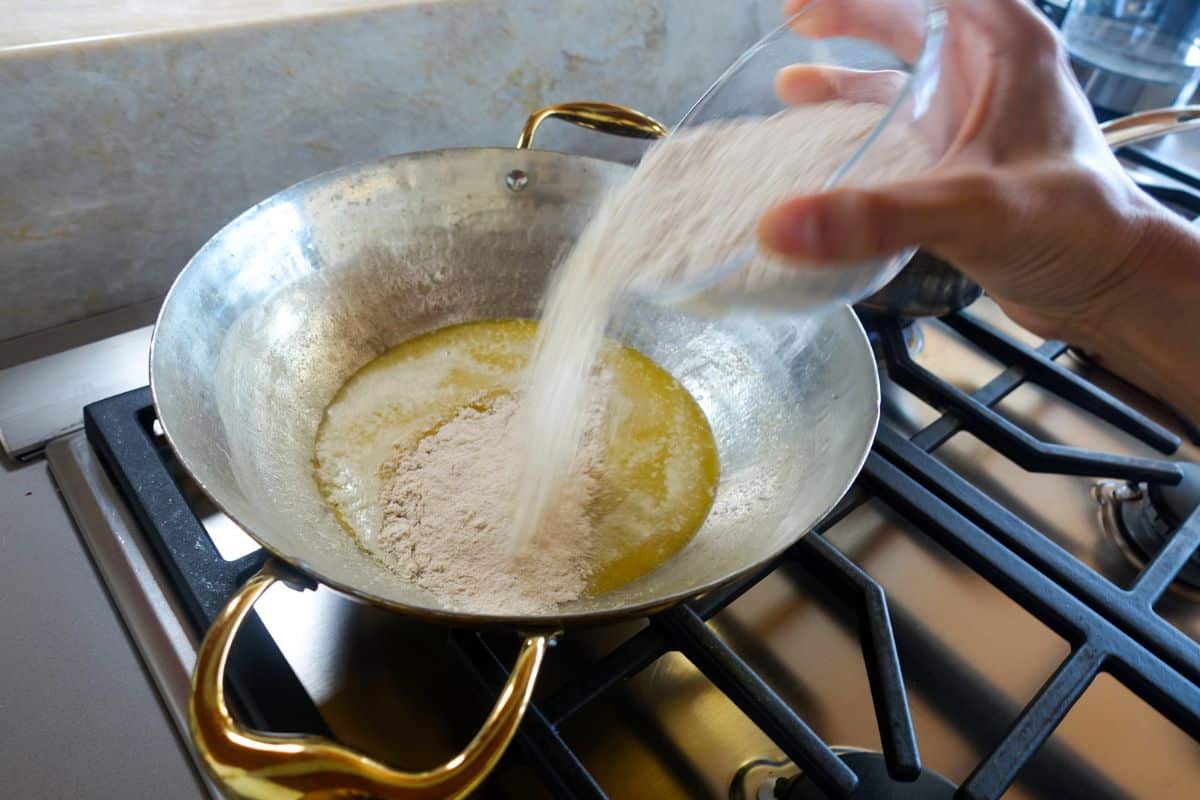
Heat butter in a pot over low-medium heat. Once melted, add atta and stir to combine.
- Cook Flour until Browned
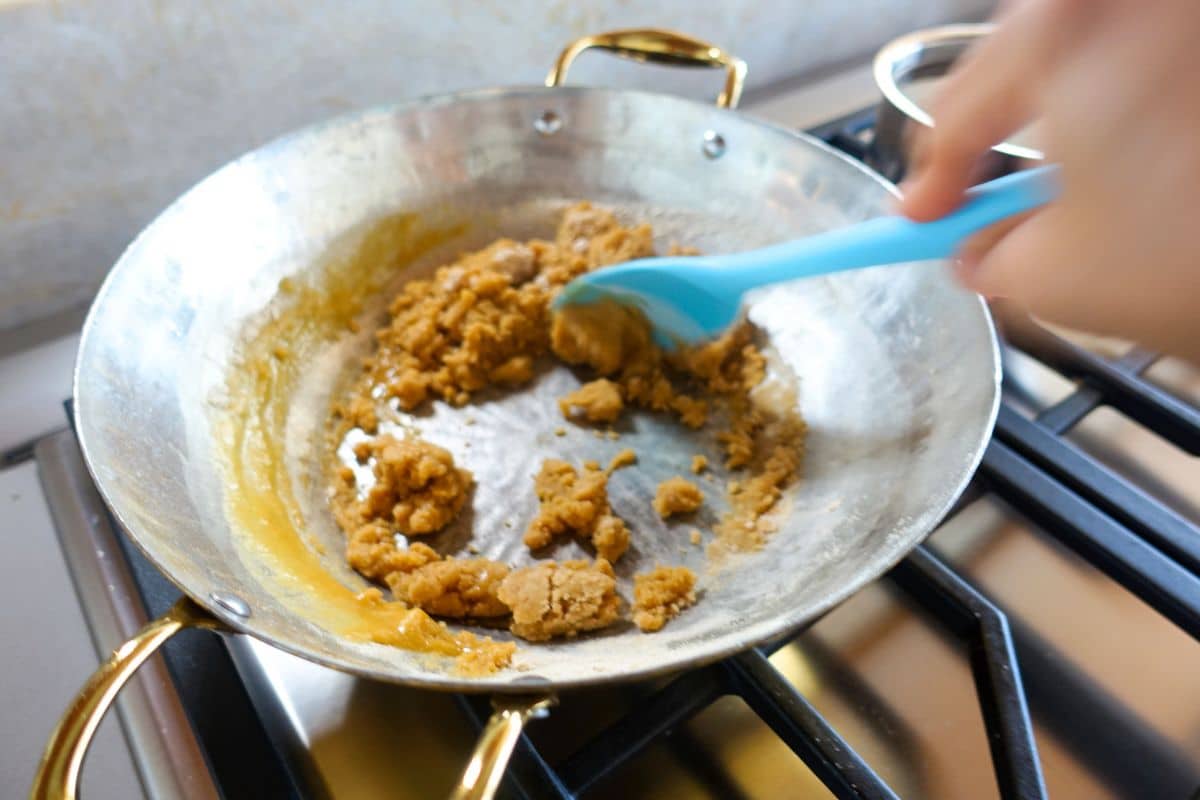
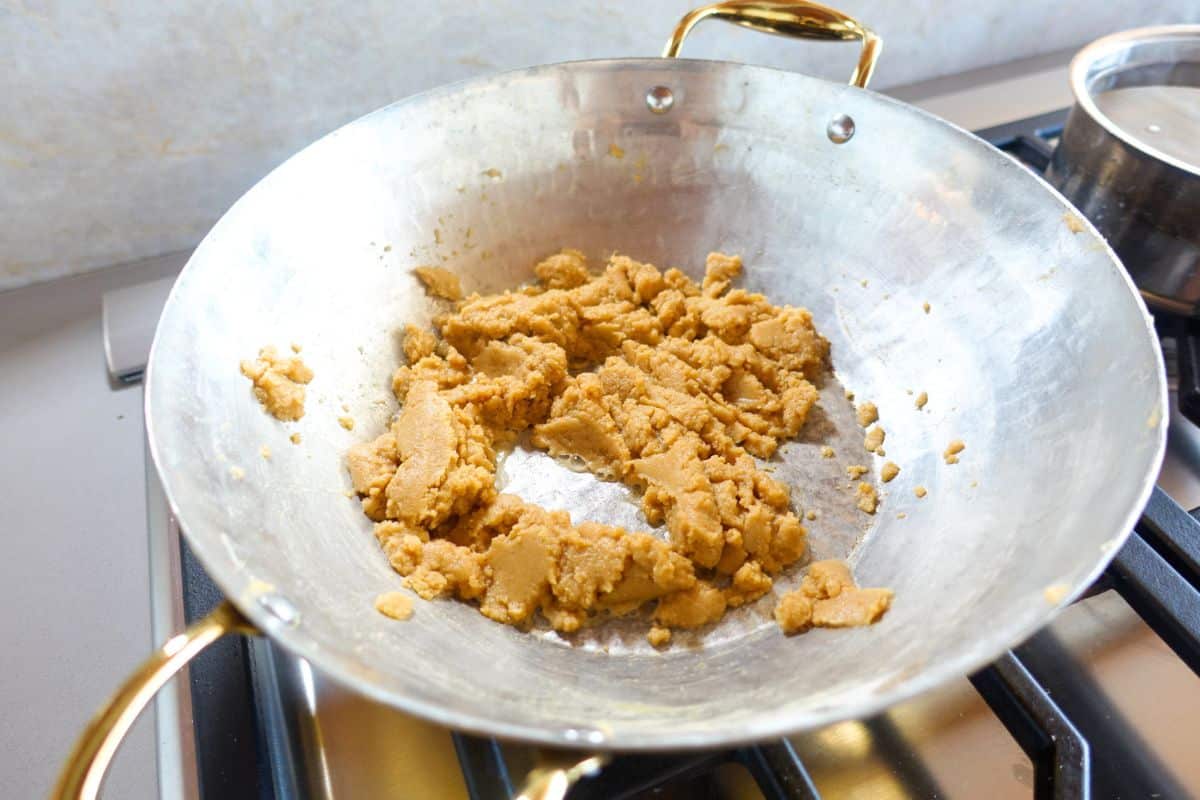
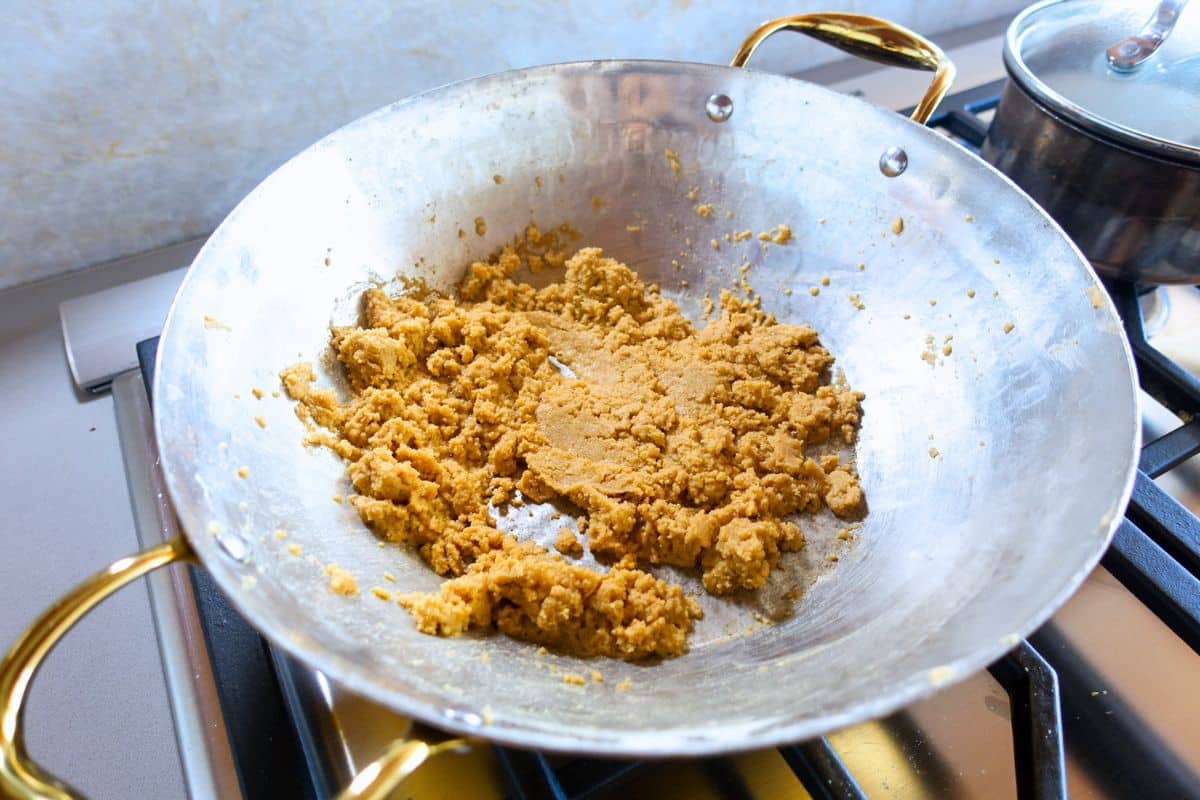
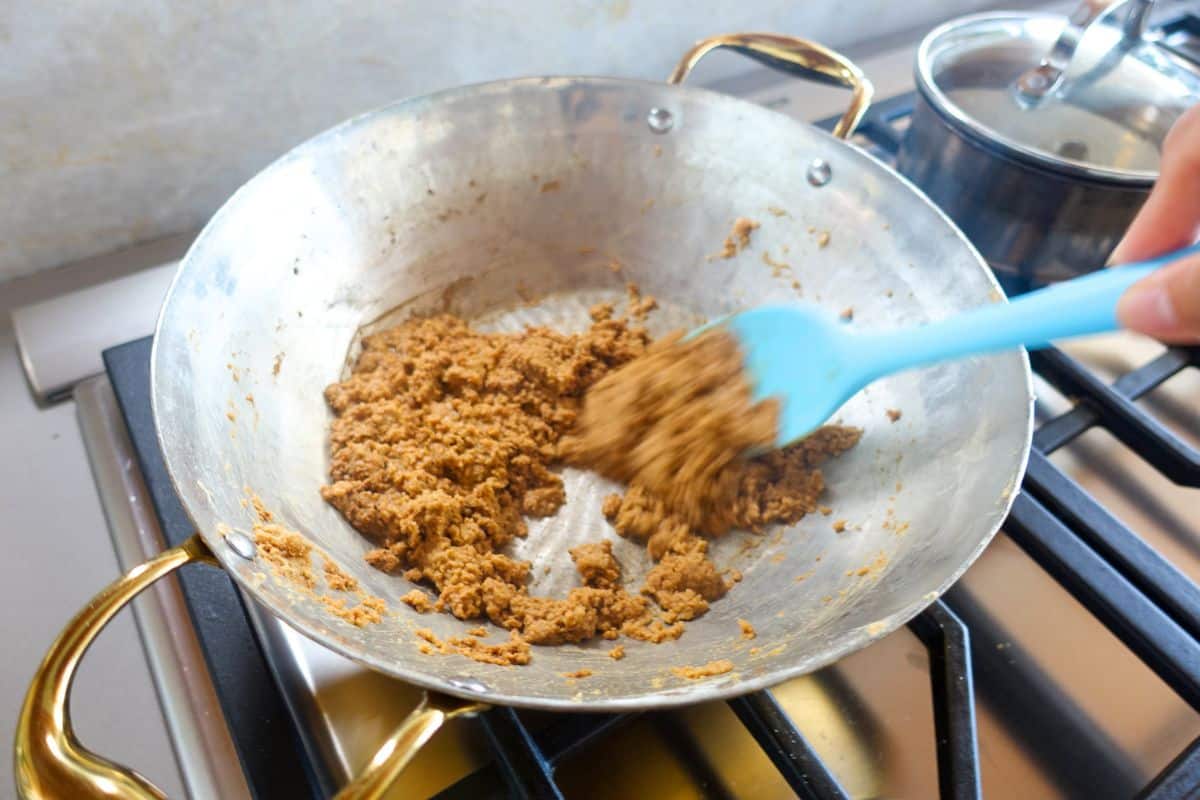
Stir the butter and atta mixture continuously until it turns deep golden brown. Keep stirring to prevent it from burning.
- Pour Sugar Syrup & Keep Stirring
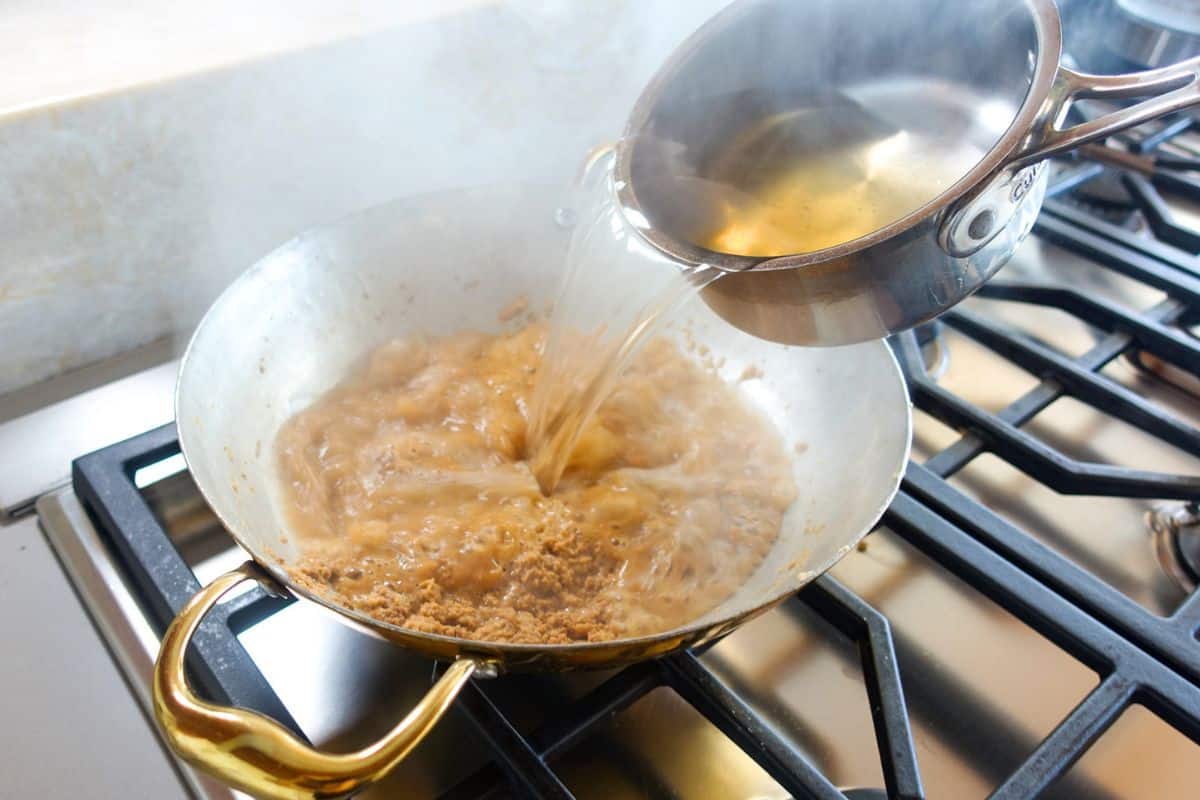
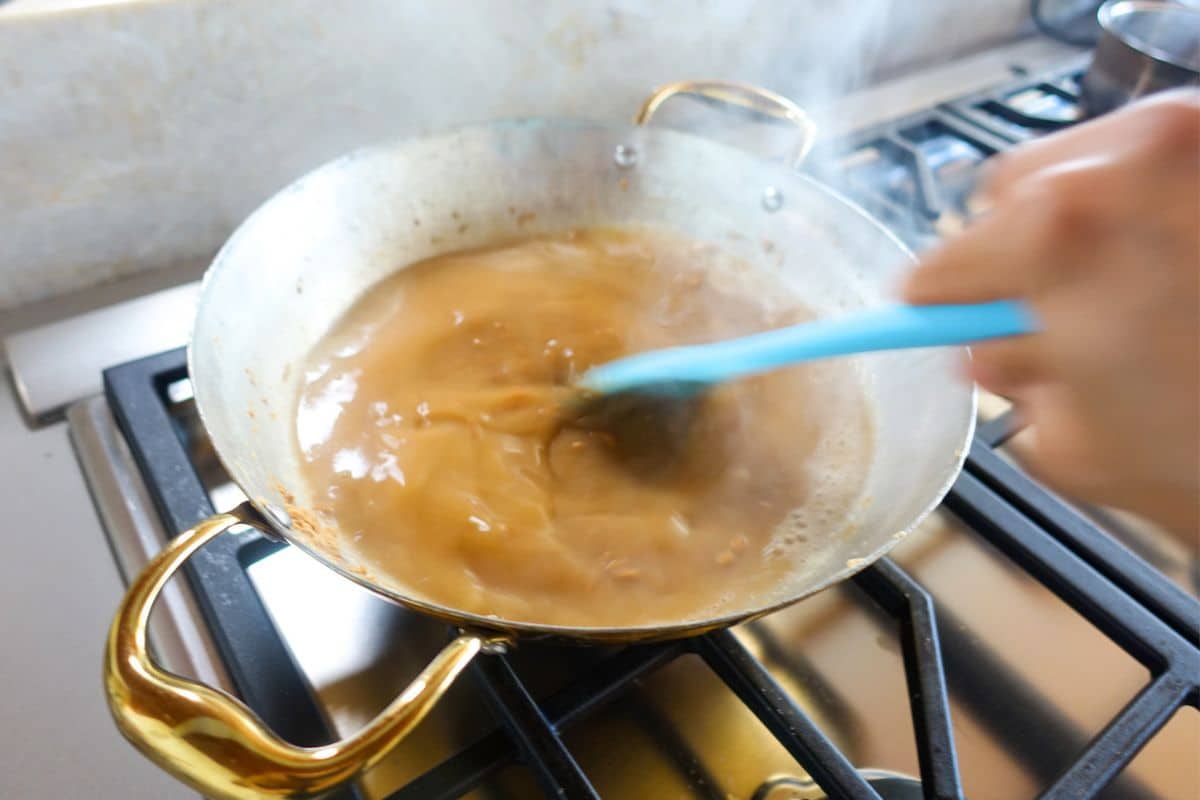
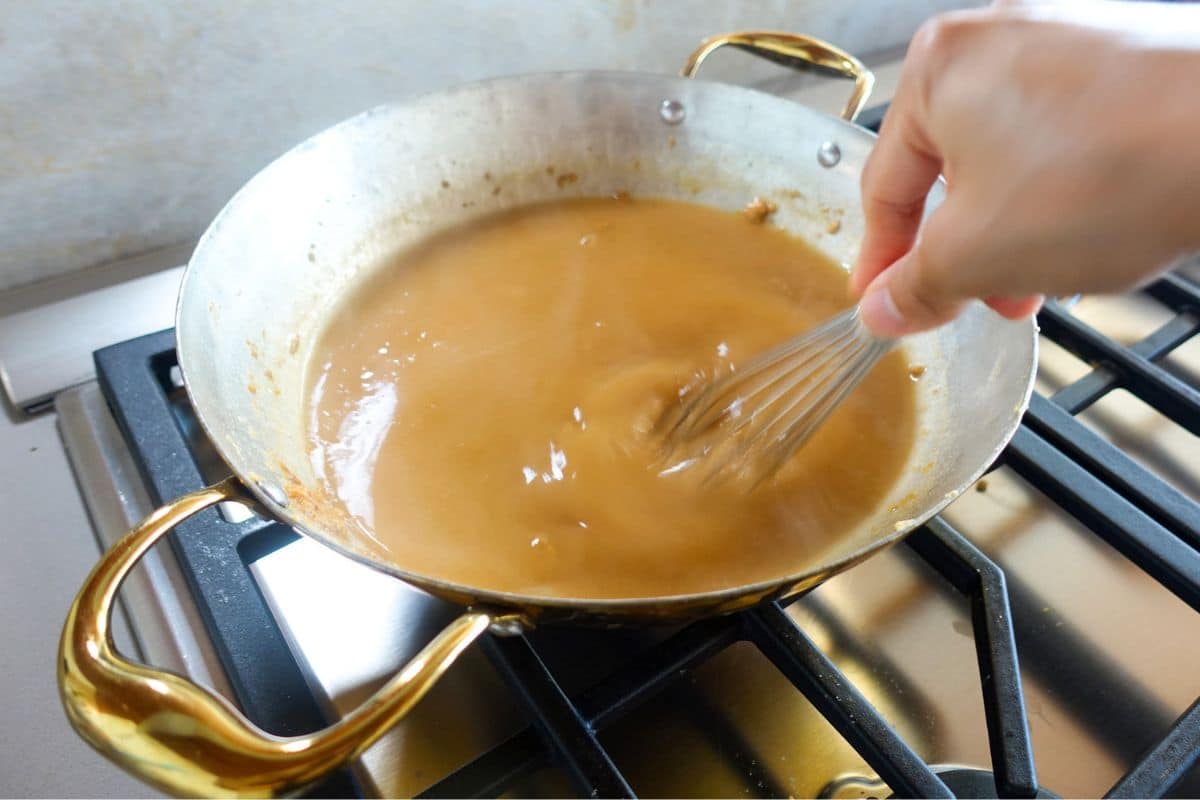
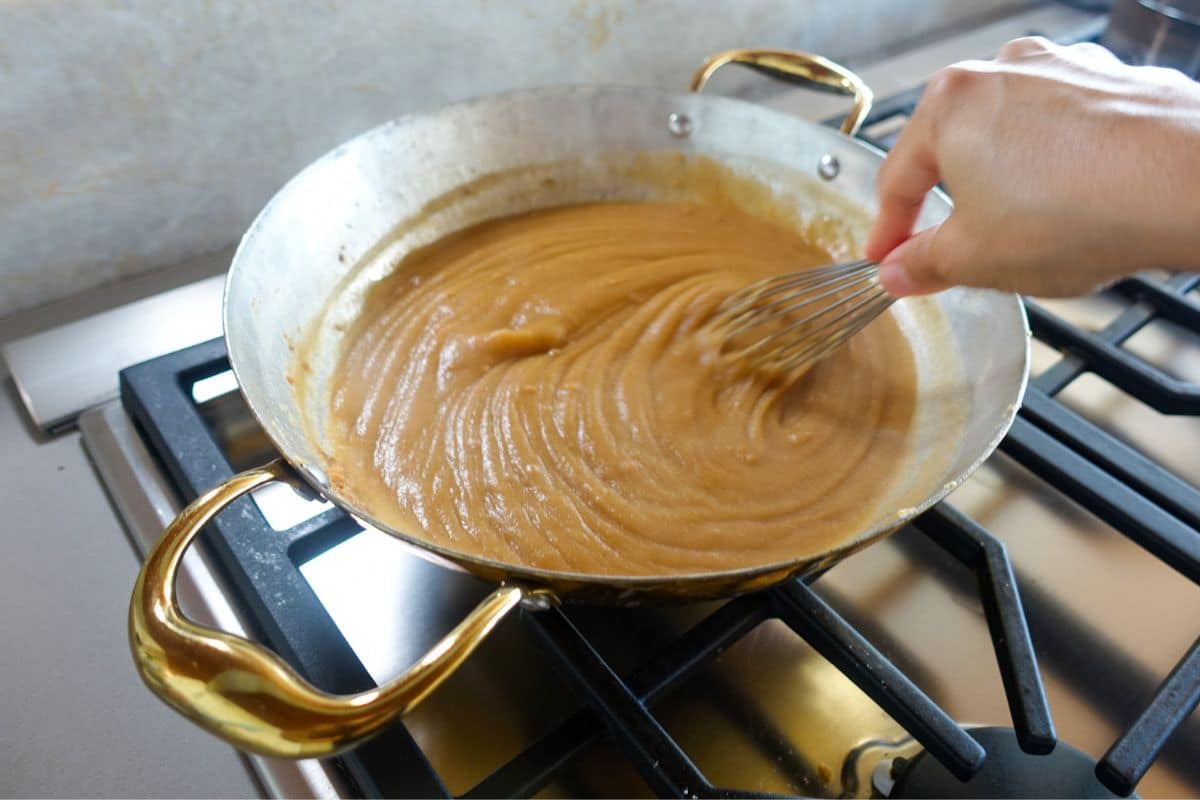
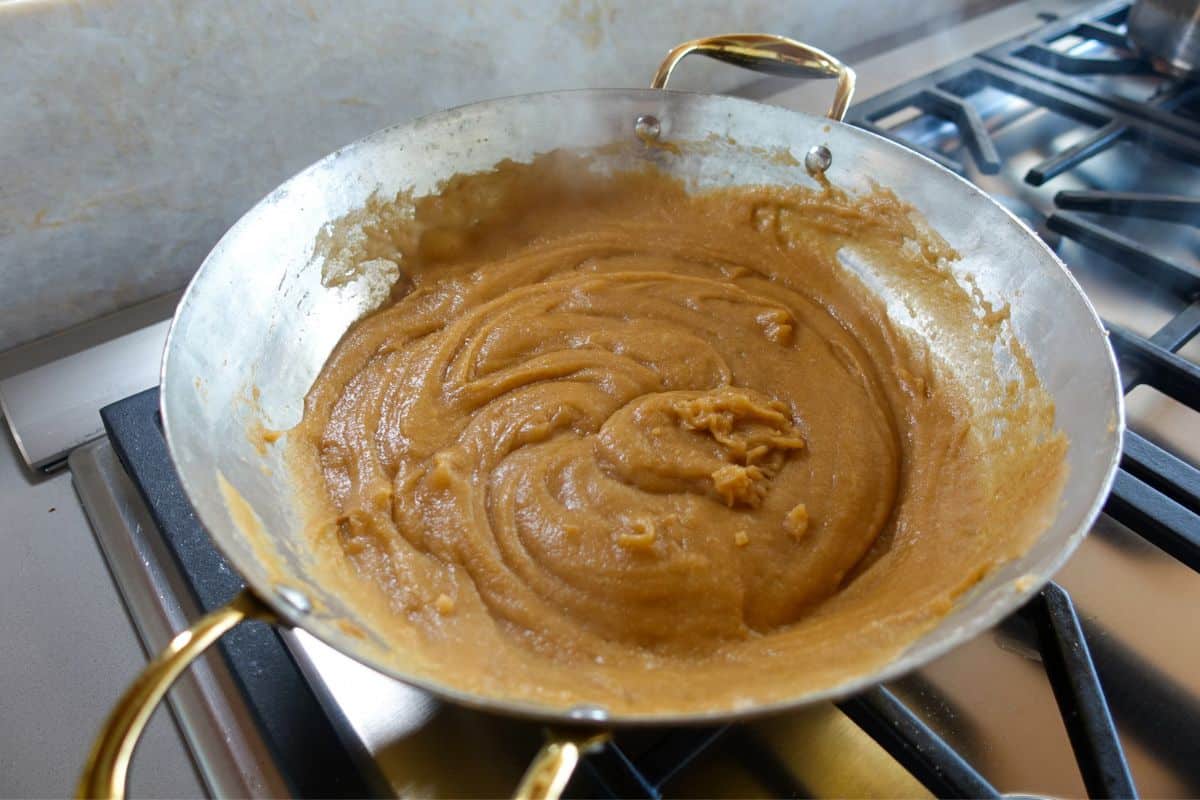
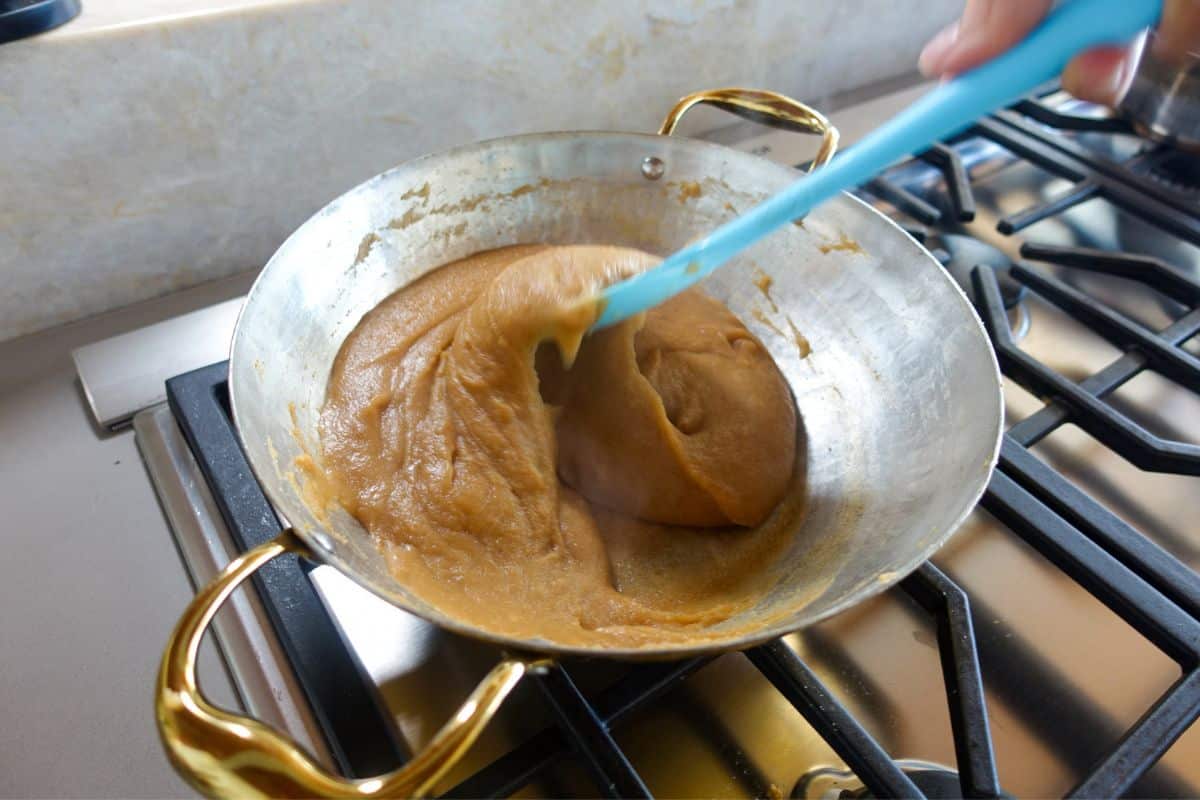
Carefully add the sugar syrup – the mixture will steam. Stir, then switch to a whisk and continue stirring until the halwa thickens into a smooth, cohesive mixture and pulls away from the pot.
SISTER’S TIP: Using a whisk avoids lumps in atta halwa and creates a smooth texture.
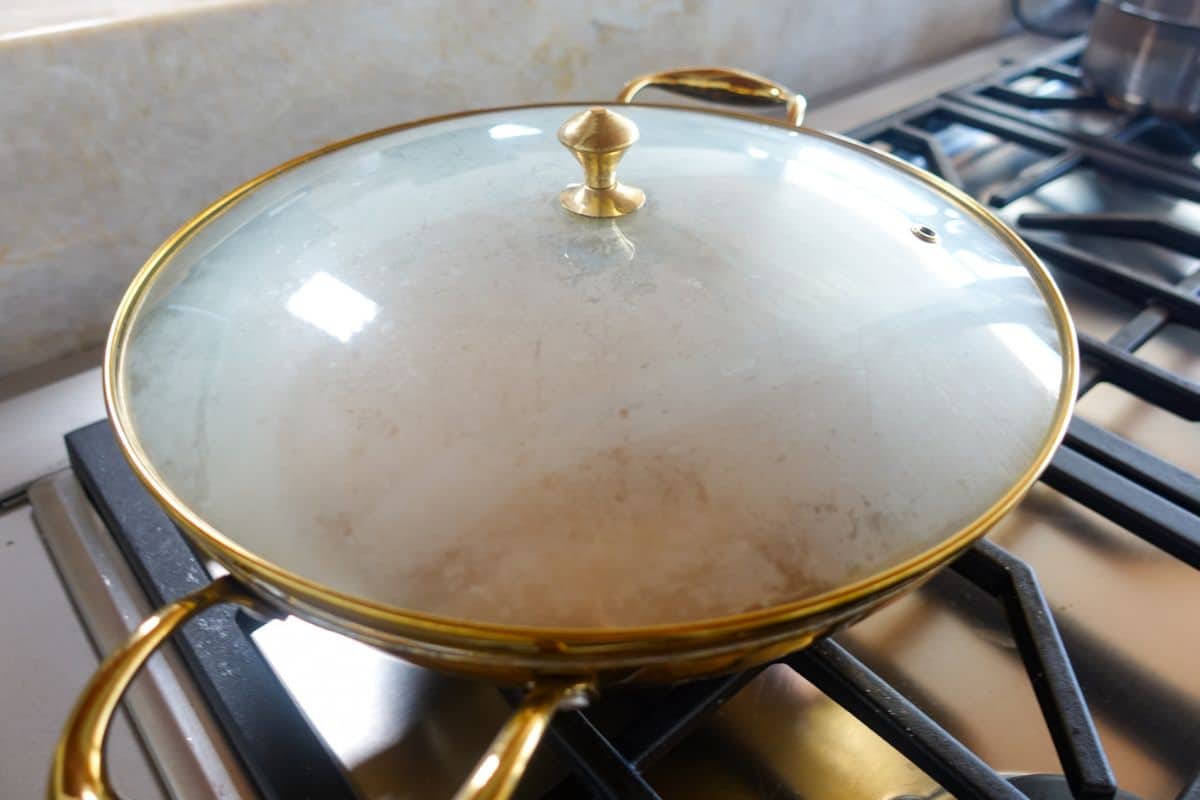
- Cover & Rest
Cover & Rest. Turn off the heat, cover, and let the halwa rest for 5 minutes before serving.
Nisha’s Tips for the best atta halwa
- Don’t Rush the Roasting – Roast the butter and flour mixture until it’s deep golden brown. This is what gives the halwa its rich flavor and color.
- Whisk After Adding Syrup – Once you add the sugar syrup, switch to a whisk and keep stirring to prevent lumps and create a smooth texture.
- Use a Heavy-Bottomed Pan – Use a heavy-bottomed pan, such as a PTAL kadhai or All-Clad pot, for even cooking.
- Keep the Heat Low to Medium – Keep the heat low to medium throughout to prevent the butter and flour from burning.
Kada Prasad
INGREDIENTS
- 3 cups water
- 1/2 cup + 2 tbsp sugar
- 1/2 cup unsalted butter*, or use ghee
- 1 cup whole wheat desi atta
- 1/3 tsp salt, optional if using unsalted butter
Garnish (optional)
- few almonds, chopped, optional
INSTRUCTIONS
- Prepare the Sugar Syrup. In a small pot, add water and sugar. Stir gently and heat on medium heat. Don't bring the sugar syrup to a boil. Once the sugar dissolves, you'll have a golden-colored sugar syrup. This process will take 8-10 minutes. Cover and set aside.
- Melt Butter & Add Atta. Heat a pot on low to medium heat and add unsalted butter. Once the butter has fully melted, add atta (wheat flour).
- Brown the Atta. Using a silicone spatula, stir the butter and atta mixture continuously until it turns deep golden brown, about 12 minutes. Keep stirring to prevent it from burning. Don't rush this step – it's what gives the halwa its flavor.
- Add Sugar Syrup & Whisk. Carefully add the sugar syrup – the mixture will steam. Using the same spatula, gently stir the liquid mixture. Switch to a whisk and keep stirring until the halwa slowly thickens. Once the halwa forms into a solid, smooth mixture and no longer sticks to the pot, it's ready. This process will take 10-11 minutes. Turn off the stove.
- Cover & Rest. Cover the pot with a lid and let the halwa rest for 5 minutes. Make sure the stove is turned off.
NOTES
- Butter: I’ve used unsalted butter for this recipe, feel free to add a pinch of salt if you prefer. If you are making atta halwa with salted butter, skip the salt.
- Storage: Refrigerate the halwa in an airtight container for up to 3–4 days. Reheat it in the microwave or on the stovetop with a little water for a slightly runny consistency.
- Serving Suggestion: Serve Atta Halwa warm or hot. It can be served as an offering or Indian dessert.




Really lovely prashad, I halved it for a poorly little one to see if he’ll eat at least this. Little success, but the taste was great. I used sakar instead of sugar
Can honey be substituted for sugar water?
Hi Ashley. No. You must use sugar. 🙂
Very easy and excellent recipe of the Kada Prasad. Steps are easy to follow and we really enjoyed it. I usually make it once a month along with urad and Punjabi Vadi. Nisha’s recipes are very good and I love making them.
Great recipe! But I don’t understand how this is gluten-free with whole wheat flour? Any form of wheat is not gluten-free!
It’s not. I’m so sorry… must be my pregnancy brain. Fixing it now. Don’t know what I was thinking!
What if we wanted to make this gluten free?! I know it wont be called kada prasad anymore but still have to ask cz i am gluten intolerant
hmm.. you can try it with besan and call it besan halwa. I would check on the measurements on another site that has besan halwa as I have not tested this. 🙂